Good food has a rhythm. Maya helps every outlet keep it.
From the first menu tap to the last stock count, Maya connects the small decisions that make a food business dependable. Customers get an easier experience, teams get clear next steps, and owners get a truthful view of what happened.
One helpful voice, across the whole food journey.
Maya may greet a customer at the menu, but her work goes much deeper. She helps diners choose, guides kitchen teams through the day and turns outlet activity into clear, useful signals for owners—in language people can actually use.
For customers
Menu discovery, recommendations, QR and voice ordering, and easier repeat behaviour.
For kitchens
Recipe guidance, the day's prep plan, stock awareness and step-by-step task prompts.
For owners
Sales, food cost, variance, compliance, team performance and the exceptions worth a conversation.
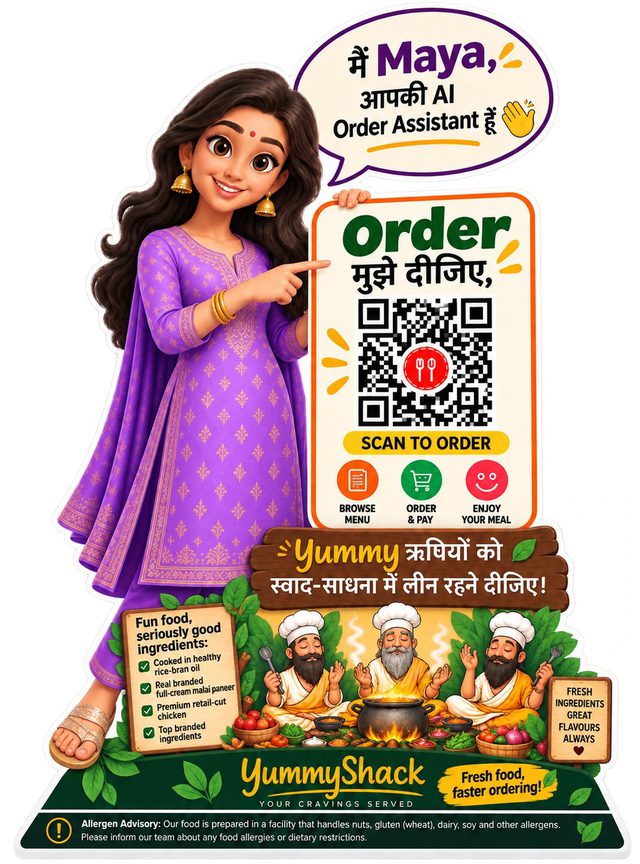 Customer-facing AI layer
Five everyday jobs. One connected memory.
A menu change should not stop at the menu. Maya carries it into the recipe, the purchase plan, the training guide and the numbers—so the outlet moves together instead of relying on scattered notes and memory.
Menu & recommendation
What to offer, where, and what to suggest next.
02Recipe & training
One recipe truth that trains a new cook within a week.
03Inventory & leakage control
Plan, buy, make, sell, reconcile — daily.
04Food-safety compliance
Hygiene run as a system, with evidence.
05Owner intelligence
The books, explained in plain language.
A lively menu that still knows its limits.
Across our brands, one Maya-powered menu keeps every counter, QR code and ordering page in step. Each outlet shows what it can genuinely make, while suggestions feel like a good host at the counter: timely, relevant and never random.
One menu brain
Brands, categories, combos and pricing managed once, published everywhere.
Outlet-aware
Every location shows what it can genuinely make today.
Reasoned suggestions
What pairs well, what suits the hour, what this customer tends to enjoy.
Their language
Tap, type or simply speak — in the language the customer is comfortable with.
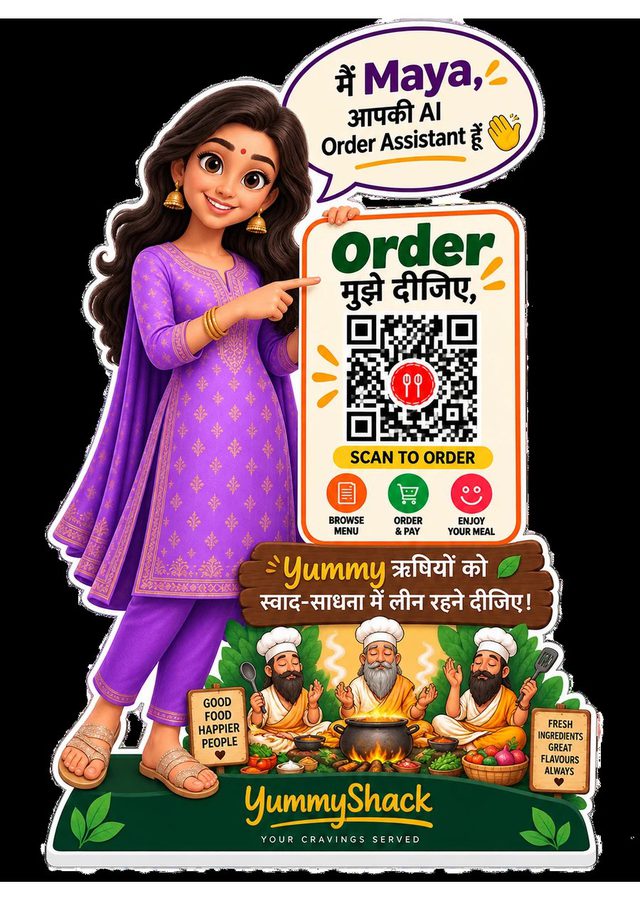 Recommendation with a reason
Know what came in, what went out and what needs attention.
Food cost rarely disappears in one dramatic moment. It slips away through over-buying, loose portions and late entries. Maya closes the loop each day, while the details are still fresh and useful.
The day starts with a plan
A requirement sheet built from recipes, recent demand and stock on hand tells the team what to prepare and what to buy — before the rush, not after it.
Every purchase and batch on record
Procurement and in-house production are logged as they happen, and the system itself asks for photo evidence of quality, quantity, bill and storage.
Recipes reconcile the books
What was sold, what the recipes say should have been used, and what is actually on the shelf are compared daily — so variance shows up in days, not at month-end.
Every correction leaves a trail
Numbers can be amended, never silently. The earlier value, the new one, who changed it, when, and the reason given all stay on record.
A seasoned reviewer, on call
Maya reads the books the way an experienced store manager would and writes a plain-language review: what looks healthy, what deserves a conversation, and what it is likely costing.
Built for many outlets
Stock moved between outlets is a movement, not a loss. Each location is measured fairly, and the group sees one consolidated picture.
Recipes that stay with the kitchen, not with one person.
Maya turns every recipe into a practical teaching tool: portions, steps, costing and presentation are defined once, then shown to the team exactly when the task is being done.
The same guidance appears as pictures of what "right" looks like and as short spoken instructions in simple Hindi — designed for team members who learn better by seeing and hearing than by reading a manual.
Anyone with basic cooking experience — a home kitchen, a roadside stall — and little or no formal education can be trained on our system within a week. That opens dignified, skilled work to people the industry usually overlooks, and gives us a kitchen that does not lose its recipes when a person moves on.
One recipe truth
The recipe that costs the dish is the same recipe that trains the cook and plans the stock.
Shown, not just told
Reference pictures of the correct result sit beside every task.
Heard in their language
A tap plays the instruction aloud, in everyday Hindi.
Consistency that travels
A new outlet opens with the same standards as the first — staffed by people trained in days, not months.
A good order can become a lasting relationship.
Maya helps us remember what customers enjoy, make the next order easier and send thoughtful nudges when there is something genuinely relevant to say. It is CRM with the warmth of a familiar neighbourhood counter—on channels the business owns.
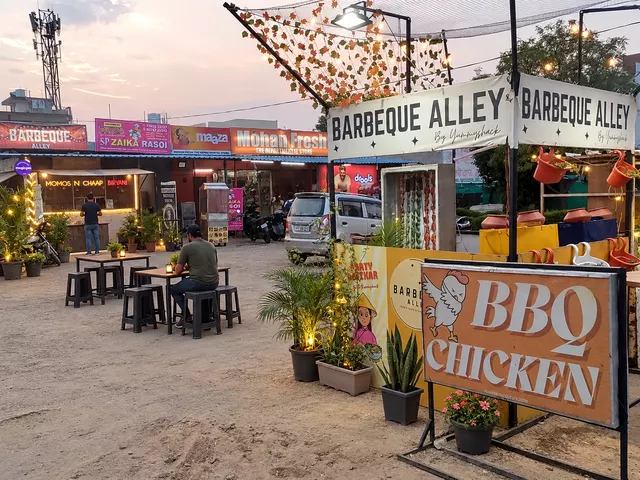 Customer simplicity, system depth
Food safety lives in the shift—not in a file opened before inspection.
Storage, hygiene, temperatures, cleaning, pest control, water, labelling and supervision are the quiet work behind a trustworthy meal. Maya turns these responsibilities into clear daily routines shaped around FSSAI expectations and FoSTaC-trained supervision.
The right task reaches the right person on WhatsApp, one at a time, and closes with useful evidence—a photo, a reading or a voice note—not just a tick.
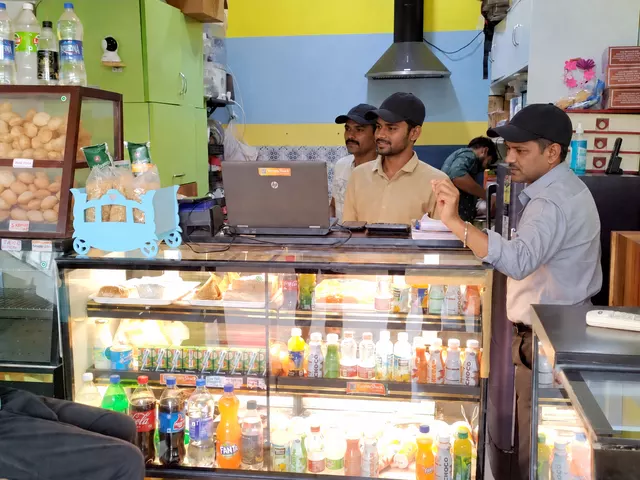 Hygiene as a habit, with proof
A living checklist
40+ checkpoints across twelve areas of kitchen practice, each with its own rhythm — every shift, daily, weekly or on renewal.
Where the team already is
Delivered on WhatsApp, paced so nobody is buried in messages. No new app to install, nothing to remember.
Evidence, not tick-marks
Photos, temperature readings and voice notes — each stamped with who, when and where.
Triggered by real events
When goods arrive or a batch is made, the system itself asks for proof that it was checked, packed, labelled and stored correctly.
Certificates that never lapse quietly
Licences, pest-control, water-test and fitness records are tracked against their validity, with renewals raised in time.
An honest audit trail
On time, late or missed — supervisors are reviewed on what actually happened, and an inspection becomes a print-out rather than a scramble.
The system stays invisible to the diner — and visible to the owner.
Customers should feel ease, taste and trust. Operators should see orders, recipes, stock, compliance, team performance and money without guessing what happened inside the kitchen — and without reading a spreadsheet to find out.
Reports are written to be acted on: a monthly profit picture with true food cost, outlet-by-outlet performance, and reviews that explain in plain language what each signal means and what to ask about it.
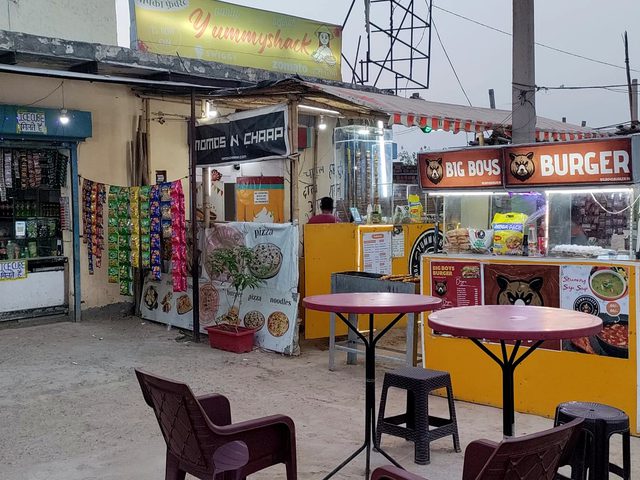 Many brands. One set of books.
Built in our kitchens, for the realities of a working shift.
Maya grew around problems we met in our own outlets. Each capability shares the same operating memory, so menu, recipe, stock, safety and customer decisions strengthen one another instead of living in separate tools.
A shelf of separate tools
- Billing knows the sale, but not the recipe.
- Stock lives in a notebook or a spreadsheet.
- Food safety is a file prepared for inspection day.
- Training leaves when the trained person leaves.
- The owner becomes the integration layer.
One operating system
- Every sale is understood down to the ingredient.
- Stock is planned, recorded and reconciled daily.
- Food safety runs every shift, with evidence.
- Knowledge lives in the system and travels to new outlets.
- The owner manages by exception, from anywhere.